International Conference dedicated to the 77th anniversary of the adoption of the UN Convention on the Prevention and Punishment of the Crime of Genocide: results of the first day
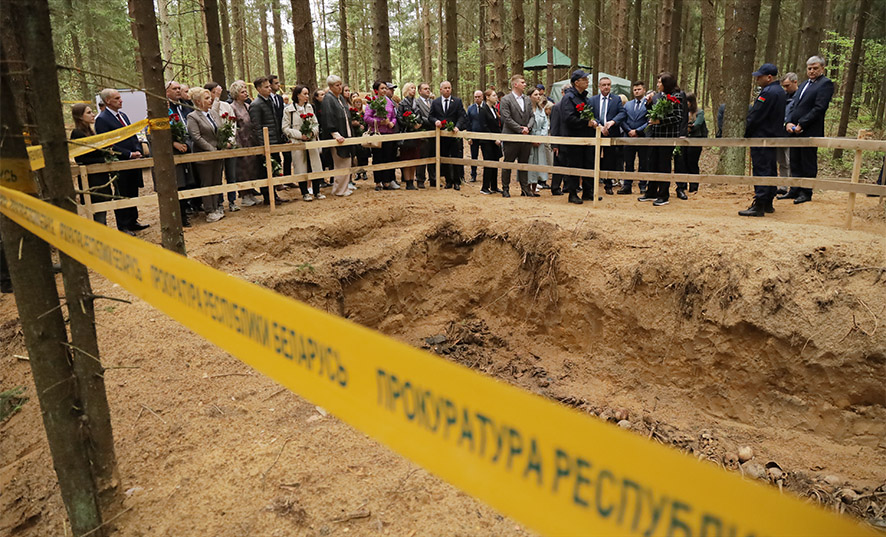
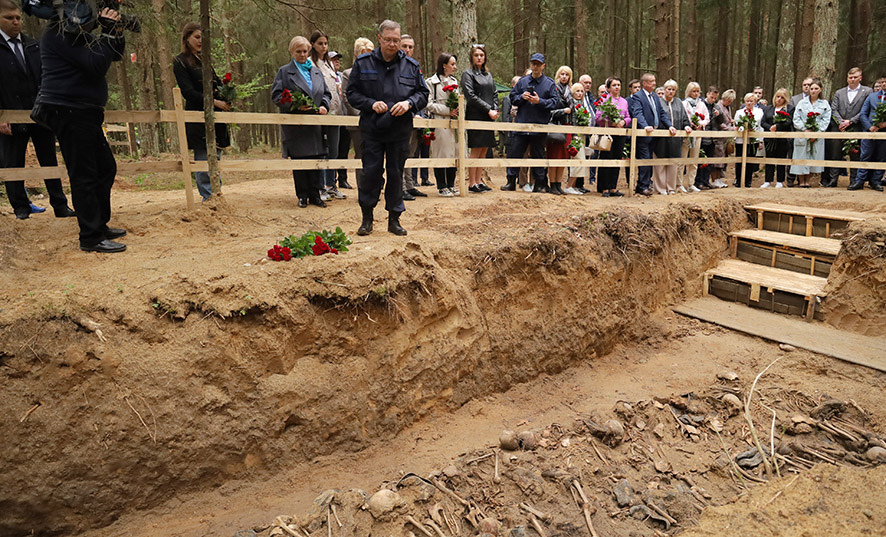
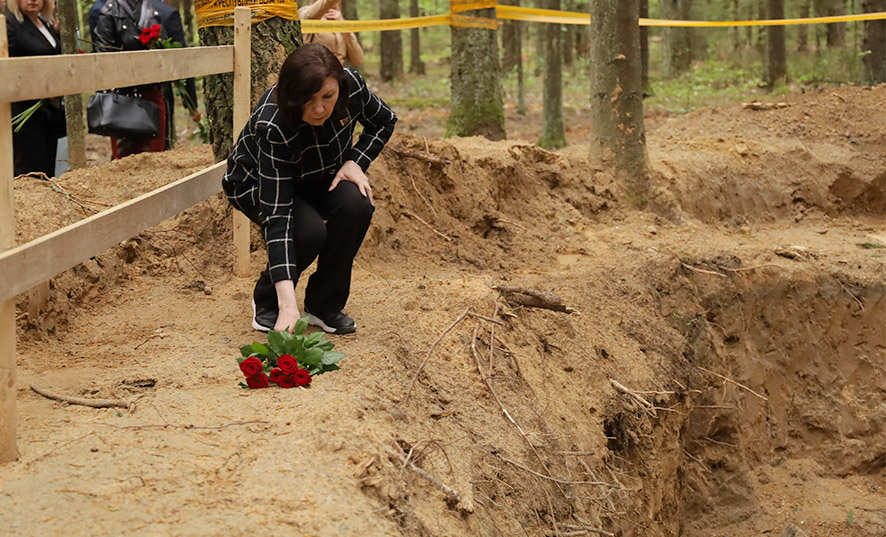
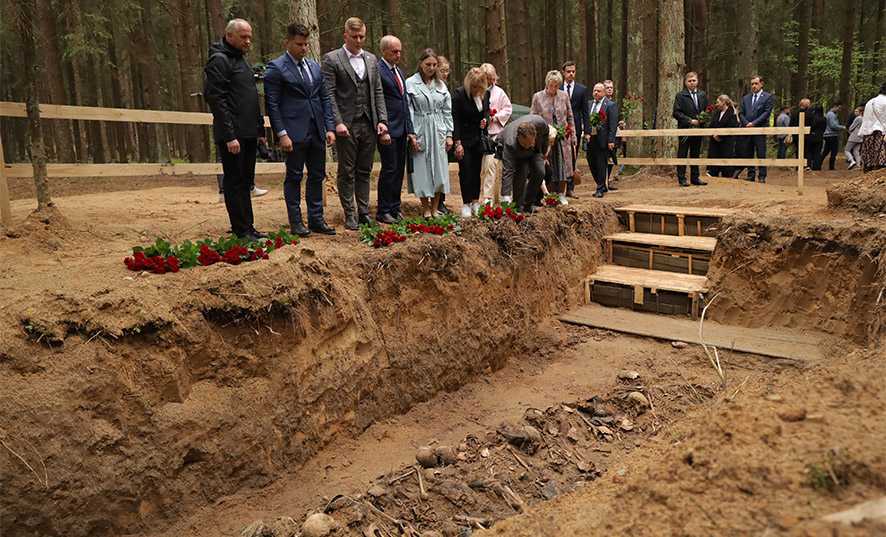
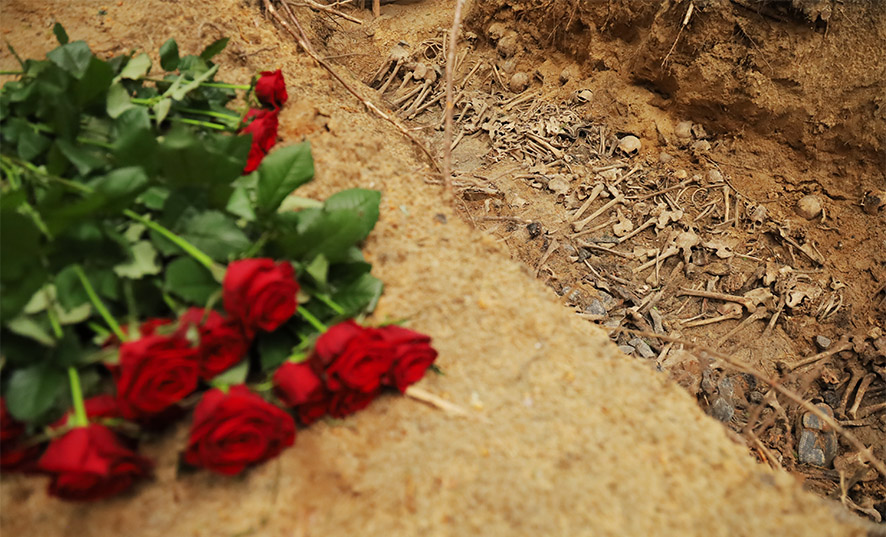
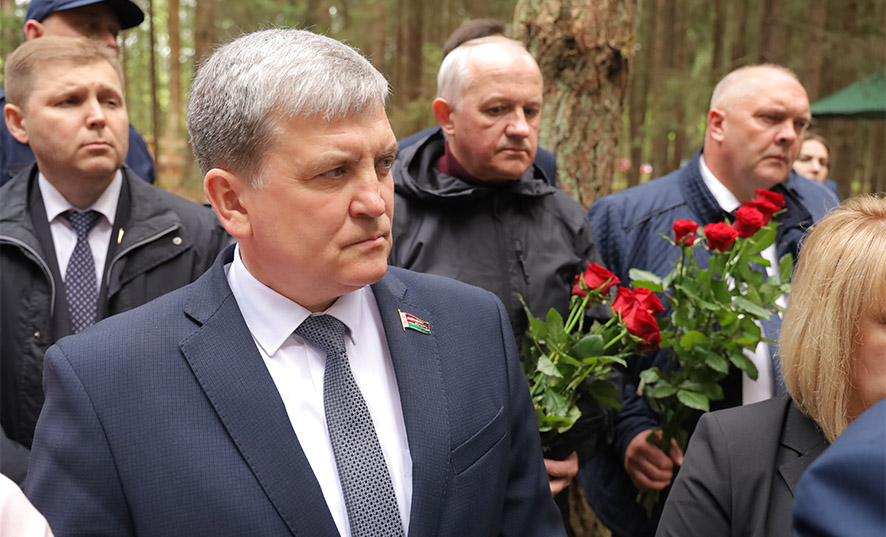
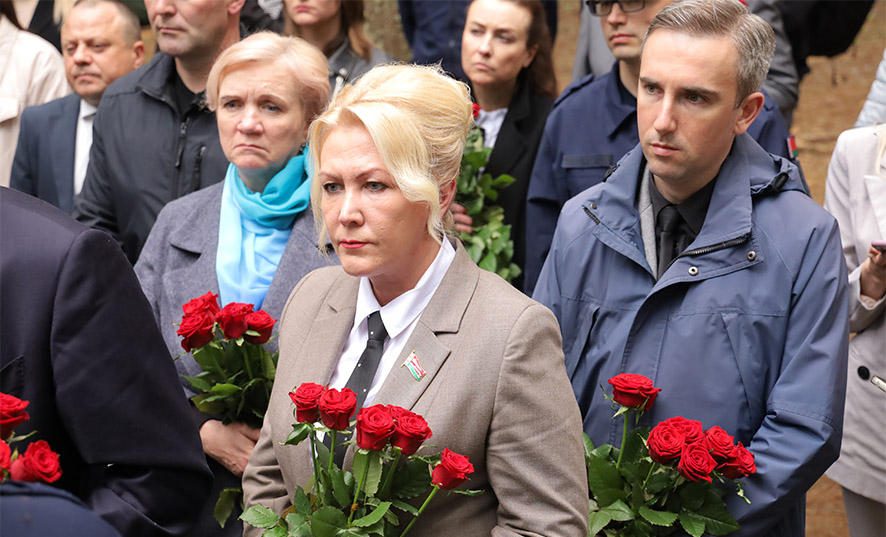
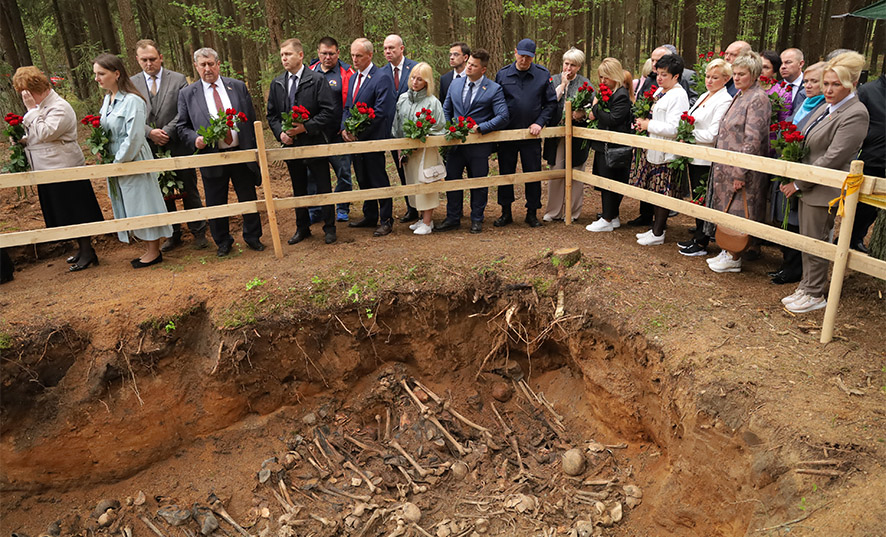
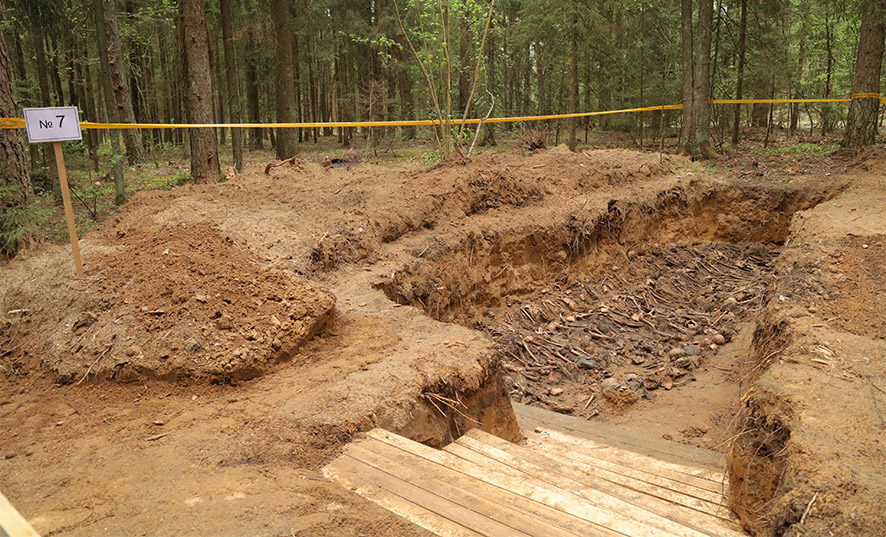
The Prosecutor General of the Republic of Belarus Andrei Shved, the Chairperson of the Council of the Republic of the National Assembly of the Republic of Belarus Natalya Kochanova, as well as members of the Council of the Republic visited the Uruchye tract, where they got acquainted with the results of the investigation of the criminal case on genocide of the Belarusian people in terms of searching for previously unknown places of mass burials of civilians and prisoners of war in years of the Great Patriotic War.
The head of the investigative group of the Prosecutor General’s Office, Valery Tolkachev, informed the senators about the progress of the investigation and the procedural actions and activities being carried out in this place. Based on the collected evidence, including that recovered from pit graves, he reconstructed the tragic events of 80 years ago.
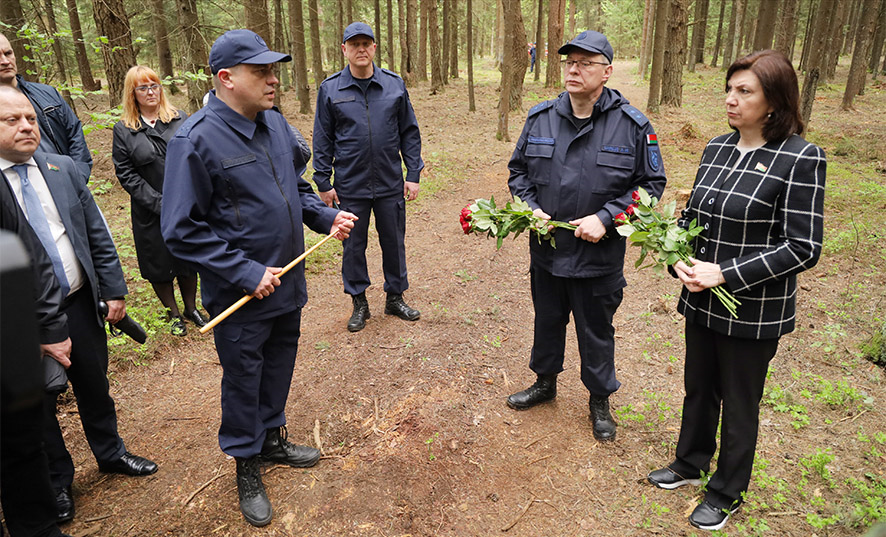
According to archival data, from 1941 to 1944, the Nazi occupiers brought here and shot civilians, as well as military personnel from Minsk and its environs; the bodies were laid in several layers and covered with soil.
In the course of the investigation of the criminal case on genocide, 19 pit graves have been discovered since 2021 in this forest area alone, 16 of which – in 2023. At the same time, archival documents contained no mention of 11 pit graves.
Five pit graves discovered in 2023 were examined by a prosecutorial and investigative group – the remains of an estimated 742 people, including children, women and the elderly, were removed from them. Work on the remaining pits was suspended in the fall of 2023.
With the onset of favorable weather conditions in March 2024, field search work was resumed – four previously discovered pits with bone remains were opened.
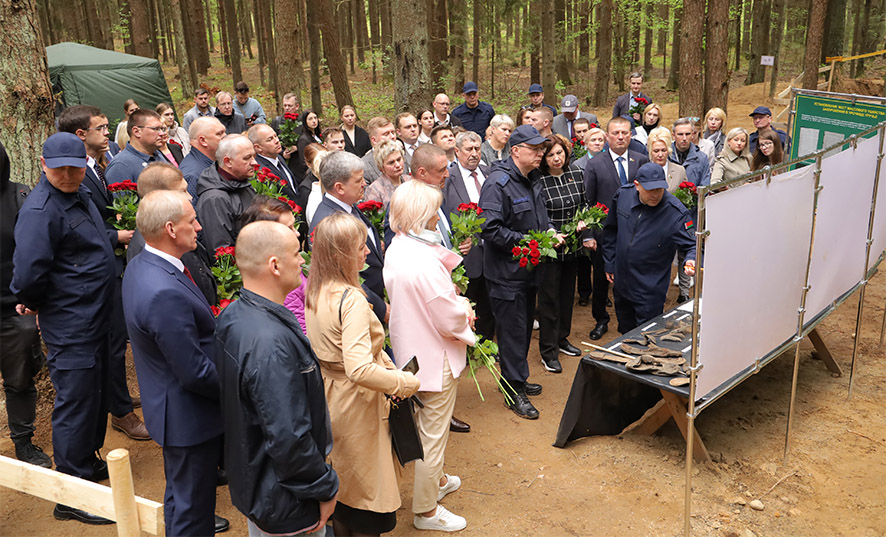

A soldier’s medallion was discovered in one of them and seized. It was sent to an expert institution, as well as to the Department for Perpetuating the Memory of Defenders of the Motherland and Victims of War of the Ministry of Defense of the Republic of Belarus for expert examination.
It was established that this medallion belonged to private Fainberg Kapel Moishevich, born in 1910, a native of Lakhva, Luninets district, Pinsk region, drafted into the Red Army during the Great Patriotic War. All members of the soldier’s family, with the exception of his brother, died in Belarus during the war. Currently, measures are being taken to identify the relatives of the deceased in order to inform them of his fate.
The Prosecutor General Andrei Shved, commenting on the events of those war years, emphasized that in this mournful place, civilians and prisoners of war were mercilessly exterminated not only by German punitive units, but also by the notorious 2nd Lithuanian police battalion: “Without any doubt, they shot and buried alive children, women and the elderly. During the excavations, we discovered the remains of a large number of children, as well as of young women aged 18 to 25 years. The Nazis and their collaborators demonstrated an unprecedented level of inhumanity towards our population.”
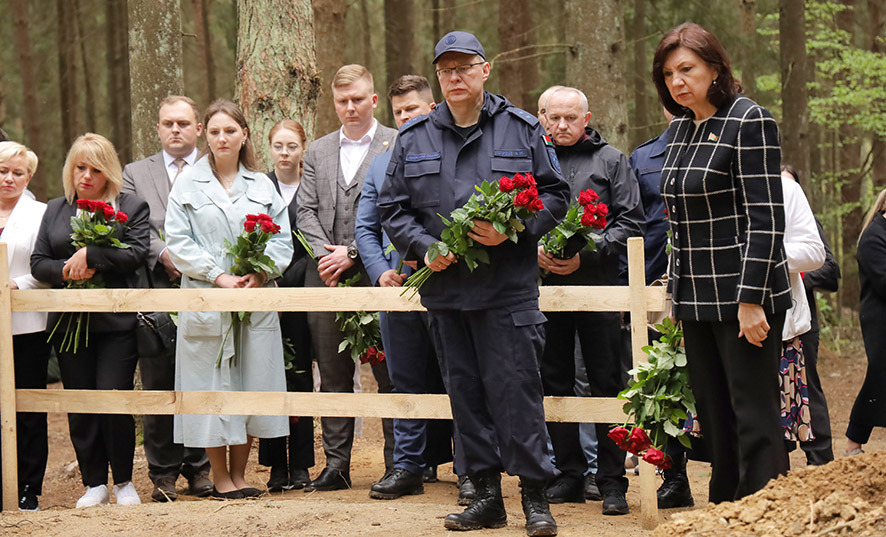


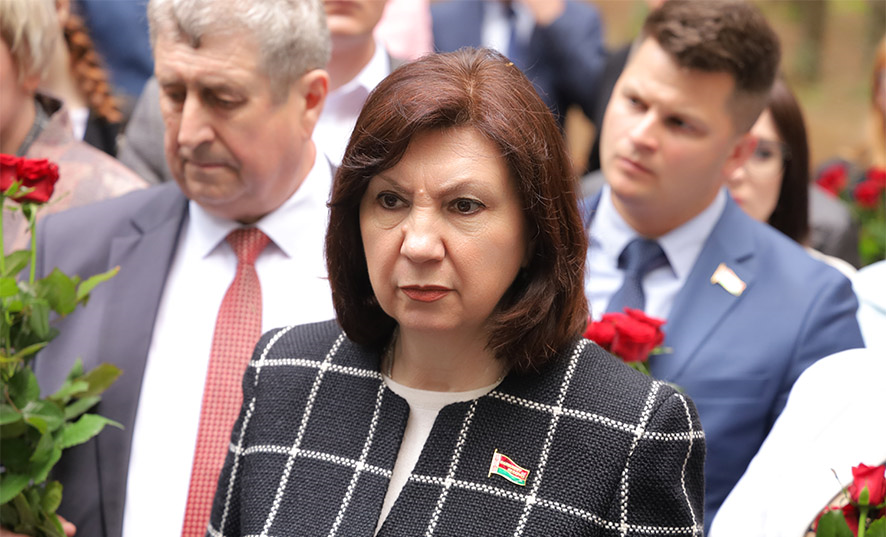
As part of the event, the Chairperson of the Council of the Republic Natalya Kochanova spoke with representatives of the media. She thanked the Prosecutor General’s Office for investigating the criminal case on genocide, which has already become a national project.
The head of the upper house of Parliament noted the exceptional importance of continuing the work begun: “There is no justification for Nazism and those people who exterminated our people. It’s difficult to call these killers people. We are indebted to those who defended our freedom and independence, who at the cost of their lives gave us a peaceful sky. We must reveal the whole truth about the tragedy that occurred on our land so that the whole world knows about it.”
The Prosecutor General’s Office will make every effort to find each hidden fact of the genocide of the Belarusian people and report it to the public.
Photo: Prosecutor General’s Office
Department for Interaction
with Mass Media
of the Prosecutor General’s Office
Other news
Strengthening traditional spiritual and moral values, perpetuating the memory of defenders of the Fatherland, victims of Nazism and fascism: a meeting of the Joint Collegium of the Prosecutor General’s Offices of Belarus and Russia was held in Suzdal
Development of cooperation in the legal sphere: Prosecutor General of Belarus Andrei Shved met with representatives of the Zimbabwe Anti-Corruption Commission
Main events
International Conference dedicated to the 77th anniversary of the adoption of the UN Convention on the Prevention and Punishment of the Crime of Genocide: results of the first day
Strengthening traditional spiritual and moral values, perpetuating the memory of defenders of the Fatherland, victims of Nazism and fascism: a meeting of the Joint Collegium of the Prosecutor General’s Offices of Belarus and Russia was held in Suzdal
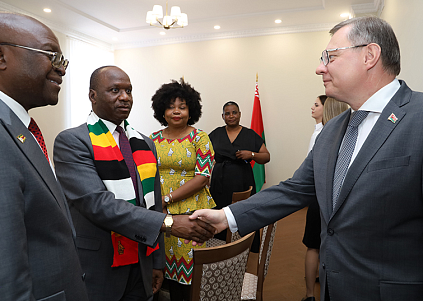
Development of cooperation in the legal sphere: Prosecutor General of Belarus Andrei Shved met with representatives of the Zimbabwe Anti-Corruption Commission