International Conference dedicated to the 77th anniversary of the adoption of the UN Convention on the Prevention and Punishment of the Crime of Genocide: results of the first day
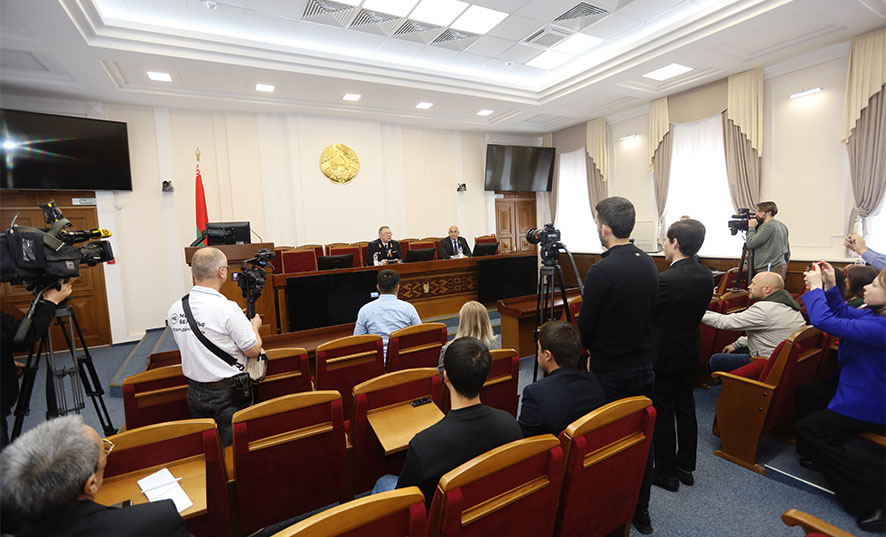
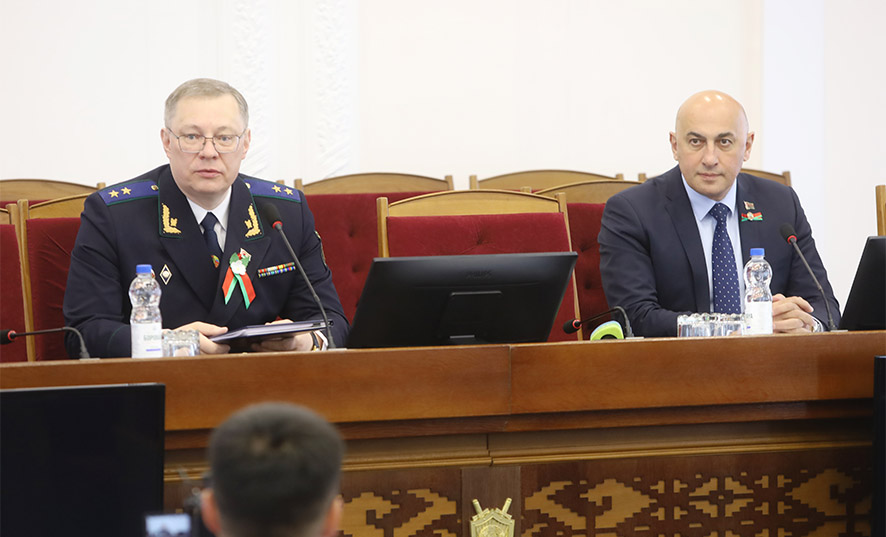
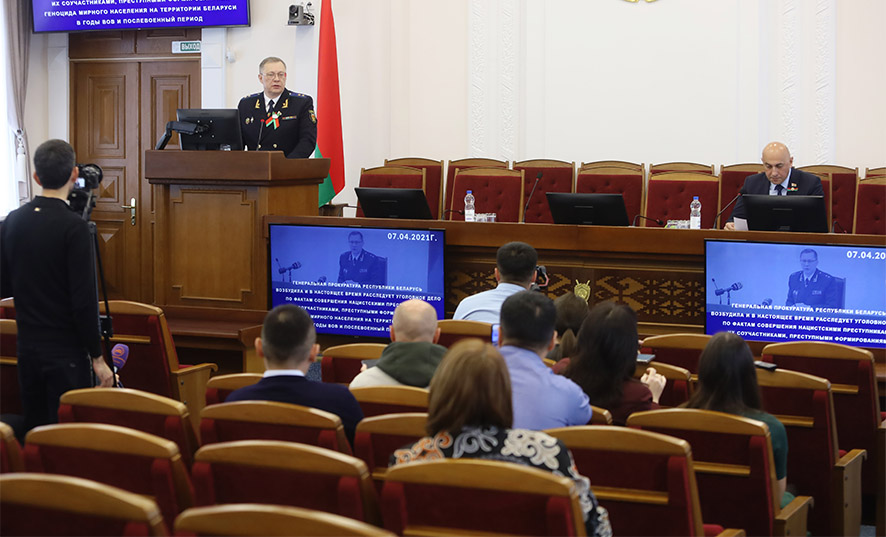
As part of a press tour organized by the Ministry of Information in cooperation with the Ministry of Foreign Affairs of the Republic of Belarus, the Prosecutor General of the Republic of Belarus Andrei Shved talked to representatives of foreign mass media about the progress of the investigation of the criminal case on the genocide of the Belarusian people and the price paid for the Great Victory.
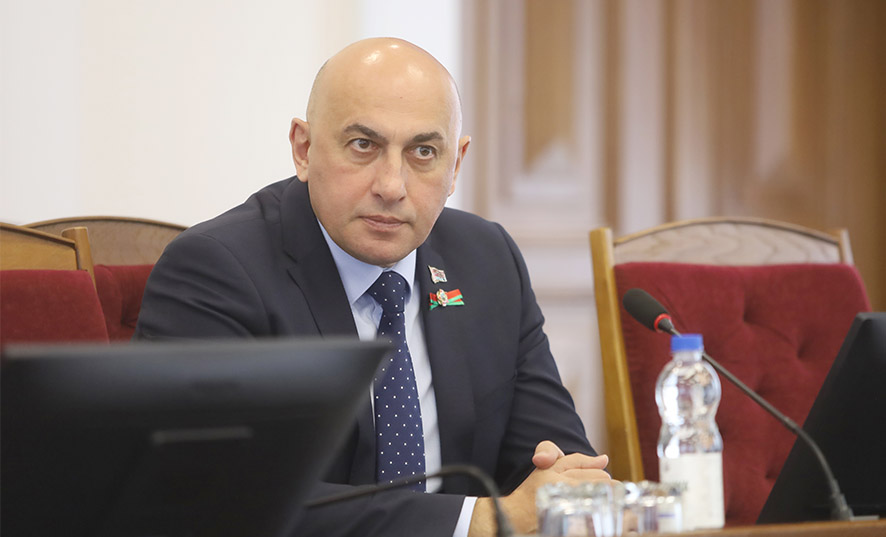
The event was also attended by the Minister of Information of the Republic of Belarus Marat Markov.
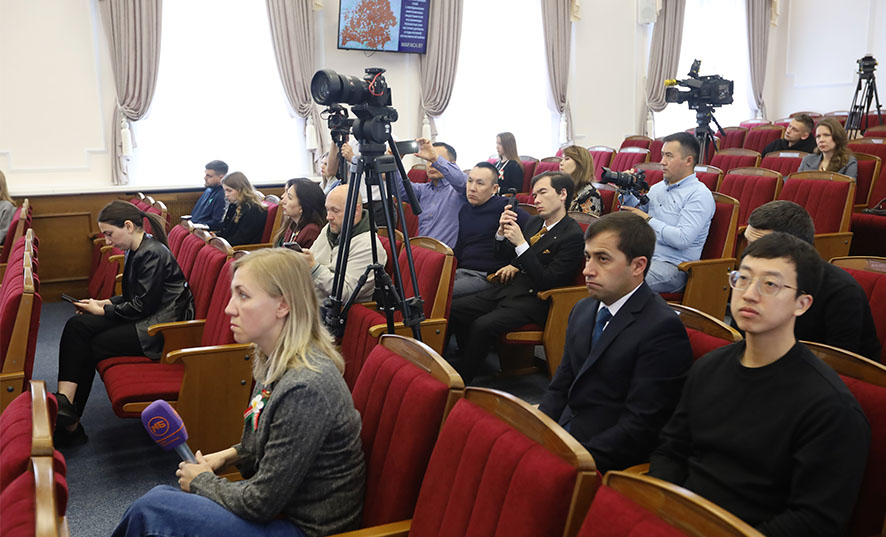
The foreign media corps was represented by journalists from Azerbaijan, Armenia, Kazakhstan, China, Kyrgyzstan, Moldova, Russia, Tajikistan, Turkmenistan and Uzbekistan.
For reference. The press tour for media representatives is dedicated to the 80th anniversary of the Victory of the Soviet people in the Great Patriotic War.
The rich programme envisaged visits to significant institutions, city-forming enterprises, historical and cultural heritage sites and places of military glory. Before its brightest and most colorful part – the ceremonial parade in honor of Victory Day, journalists from foreign media were able to personally communicate with the Prosecutor General of the Republic of Belarus, learn more about the tasks of the investigative group to investigate the criminal case on the genocide of the inhabitants of the BSSR, which were set before it by the Head of the Belarusian State, receive updated data, as well as information about the plans for the investigation in the coming years.
In his welcoming speech, Andrei Shved emphasized the exceptional importance of disseminating reliable information in the media space about the genocide of the Belarusian people and the terrible events that befell the inhabitants of the BSSR during the occupation, noting that “the genocide of the Belarusian people is inseparable from the genocide of the Soviet people – this is our common history.”
The Prosecutor General of the Republic of Belarus opened the event with information about the events that preceded the initiation of the criminal case on the genocide of the Belarusian people and what prompted thinking about the need to make such a procedural decision. He recalled the words of the Head of State in this regard: “You have no idea what a heavy and large layer will have to be lifted.”
“The attempted color revolution in August 2020 and the subsequent post-electoral period forced us to look deeper into the history of the country. Fueled by the ideas of Nazism, the extremists’ desire to carry out a coup d’etat in Belarus showed that we are beginning to forget the tragic pages and lessons of history,” the head of the supervisory agency noted.
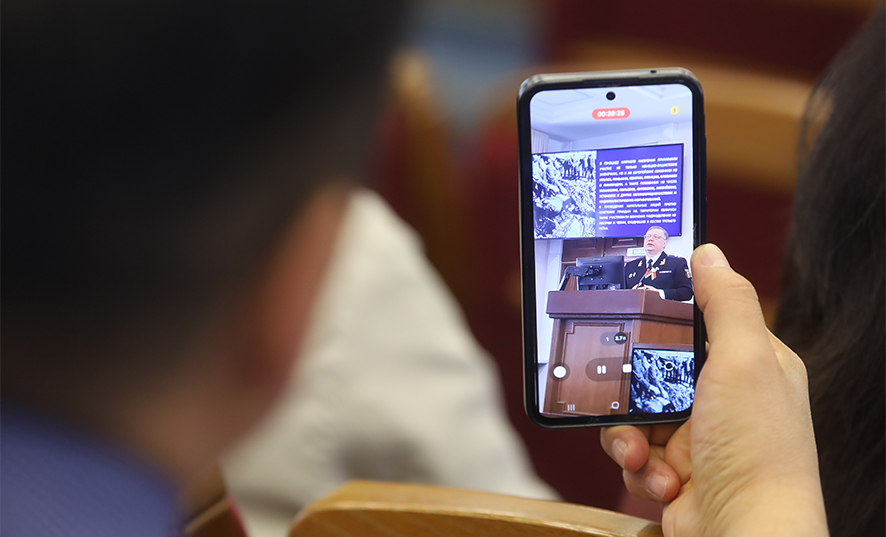
His report, informative and analytical, was filled with figures and references to official documents, including German ones from 1939-1945.
During his speech, the Prosecutor General of the Republic of Belarus dwelt in detail on the tasks facing the members of the investigative team and other prosecutors in terms of protecting historical truth and memory.
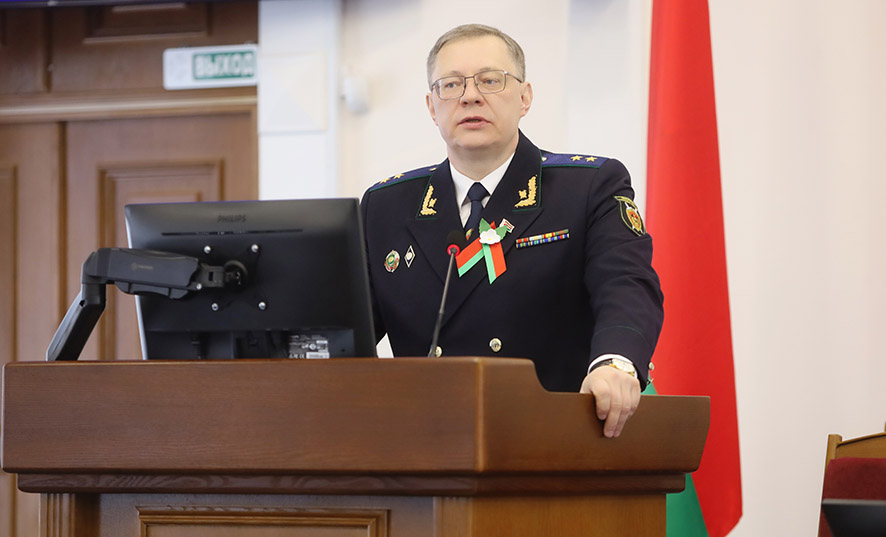
Summing up the results of four years of investigation of the criminal case, Andrei Shved stated: “Belarus was subjected to all forms of genocide contained in the UN Convention on the Prevention and Punishment of the Crime of Genocide. The scale of the tragedy turned out to be much wider than it was generally believed in Soviet times. Today we can say with certainty that during the period of the Nazi occupation, 12,868 settlements were completely or partially destroyed, 290 of which shared the fate of Khatyn. On the territory of the BSSR, the Nazis created 578 death camps, about 101 of them we did not know before. The invaders and their accomplices killed at least three million civilians and prisoners of war, and drove more than 380 thousand people into German slavery.”
In his speech the Prosecutor General of the Republic of Belarus dwelt separately on the plans for the genocide of the civilian population prepared well before Hitler’s invasion of the territory of the Soviet Union, which is confirmed by the archival documents obtained.
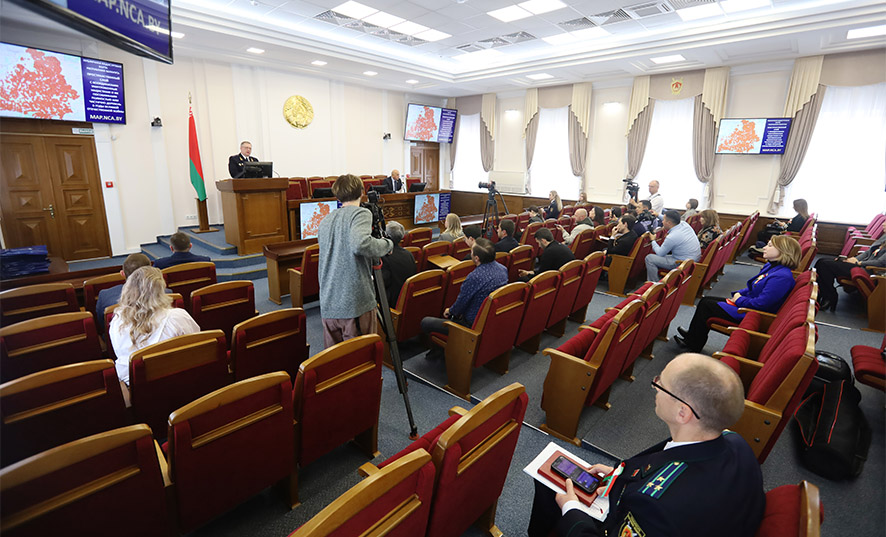
“Already in 1939, punitive units were formed in Dresden, and in 1940, official documents appeared reflecting Germany’s political views on the Slavic population. One of the goals of the war against the USSR was to reduce its population by 30 million people in order to clear out “living space” for the Germans,” he noted.
Andrei Shved provided data on some punitive operations organized by the fascists and their accomplices on the territory of the BSSR: “The barbaric extermination of the civilian population began in the first days of the occupation. Already in September 1941, a punitive operation took place on the territory of the Polesie region. And in July 1942, the occupiers carried out a punitive operation on the territory of the Belovezhskaya Pushcha. Then, in order to create hunting grounds for the Wehrmacht top brass, the Nazis “cleared the territory,” for which no less than 14 thousand civilians were killed. The fascists themselves called these operations “pacification actions,” and referred to themselves in documents as “volunteers.” During the investigation of the criminal case on genocide, we collected information on the carrying out of no less than 187 major punitive actions.”
What is the real face of fascism? The answer can be given by living witnesses of those terrible years, whose stories are documented during the investigation of the criminal case. From the memoirs of a witness: “To me, then a seven-year-old girl, a German soldier brought a basket of severed human fingers and made me remove gold jewelry from them. For any delays “in the work” he shouted at me and could hit me.”
From the protocol of the inspection by Soviet troops in April 1944 of the area near the village of Simonichsky Mlynok (currently – Lelchitsy district of the Gomel region): “From the opened pit, 72 bodies were removed, including 20 children under 15 years of age, eight of whom were infants, 35 women, two of whom were pregnant, and three old women. Violent death in most cases was caused by cold blunt weapons. Most children and adults had their heads smashed. Infants were in the arms of their dead mothers. Some people were only wounded and buried alive.”
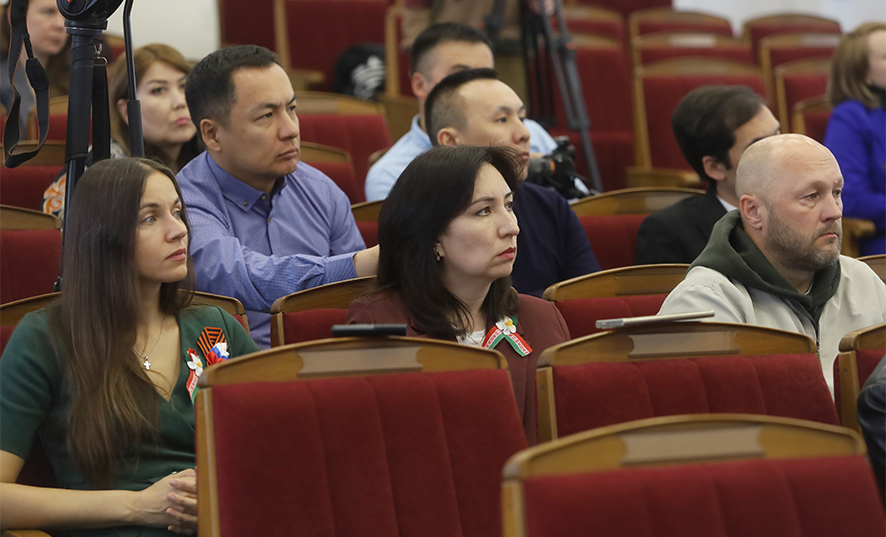
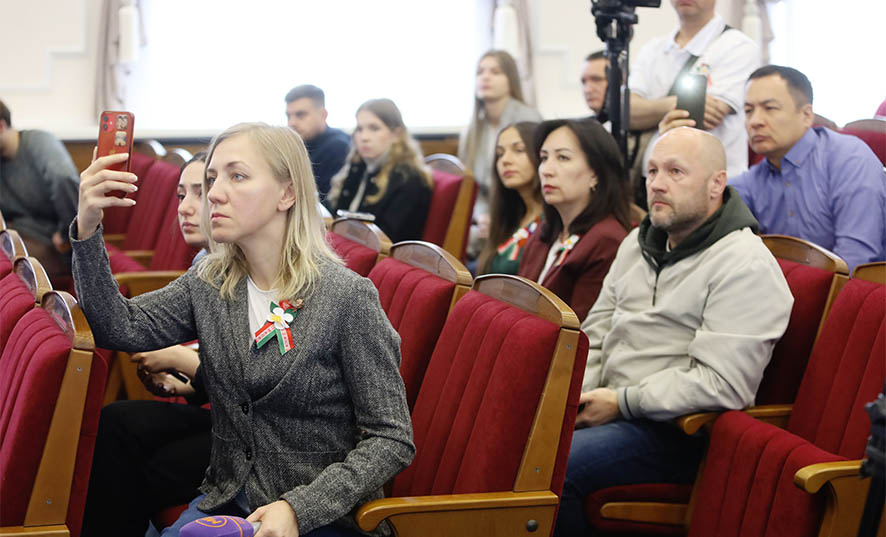
All the above examples are only a small part of the facts that have been established over 4 years of investigation of the criminal case on the genocide of the Belarusian people, and the activity of investigative actions has not decreased to this day.
But the most terrible thing is that in 1945, Nazism was not destroyed, since several tens of thousands of Nazis escaped justice, emigrated to the United States, Canada and other countries. “We have sent over 130 requests for legal assistance to 31 foreign States. We have information about 400 accomplices of the fascists who are still alive. As part of the criminal case, lists of all those involved in the genocide of the civilian population of the BSSR are being compiled, and every fact of their atrocities is scrupulously recorded,” Andrei Shved noted in his speech.
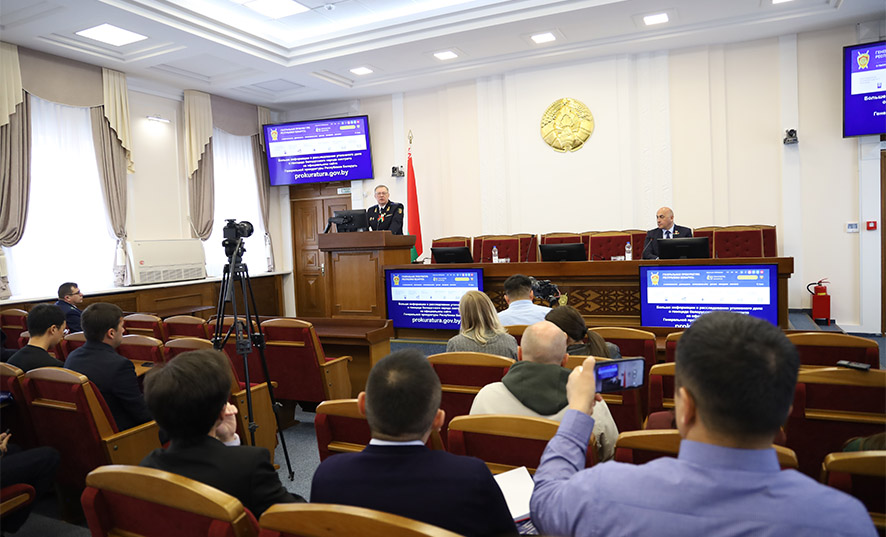
The head of the supervisory agency informed the journalists about the results of inspections of the places of mass extermination of citizens. He showed footage from excavations in the Chenkovsky forest of the Gomel district, the Ivanovshchina tract in the Logoisk district and the Uruchye tract in the Minsk district. He drew attention to the organized work on visiting such mournful places by labour collectives and students, which is especially meaningful for young people. He pointed out the importance of communicating to the general public the data obtained during the investigation of the criminal case: preparing and publishing books in Russian and English, conducting joint projects with the media and the Belarusfilm film studio.
The conversation with representatives of foreign media was intense, emotional and very frank.
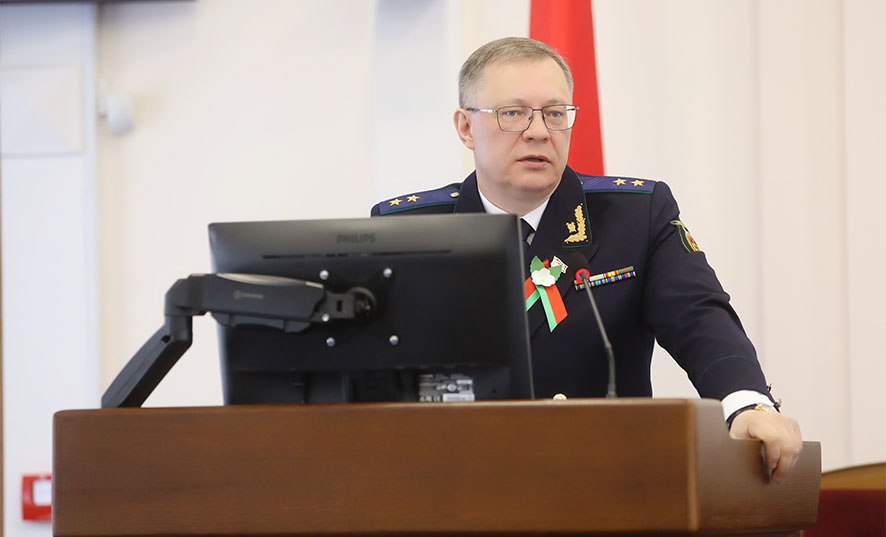
At the end of his speech, Andrei Shved separately noted that “Belarusians remember and appreciate the help of citizens of all former Soviet republics. Their courage and feat are forever imprinted in the names of streets, memorial complexes and monuments erected in different regions of Belarus. This was a common cause and a common Victory of the Soviet people, who stood firm and defended their independence.”
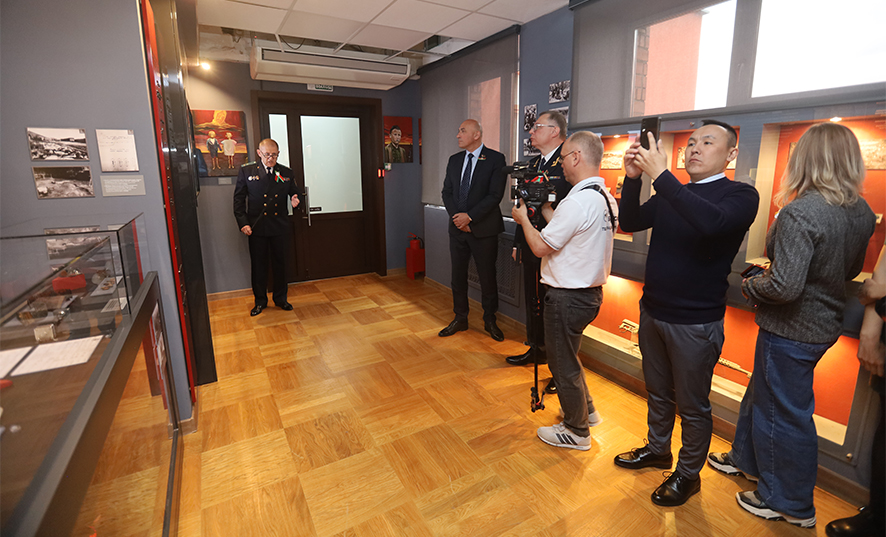
The event for journalists continued with a visit to the museum of the Prosecutor General’s Office. A representative of the office told about its main parts of the exhibition, and focused on the one devoted to the genocide of the Belarusian people.
As a souvenir of the visit to the Prosecutor General’s Office of the Republic of Belarus, each participant of the press tour was presented with the book “Genocide of the Belarusian People” published by the office.
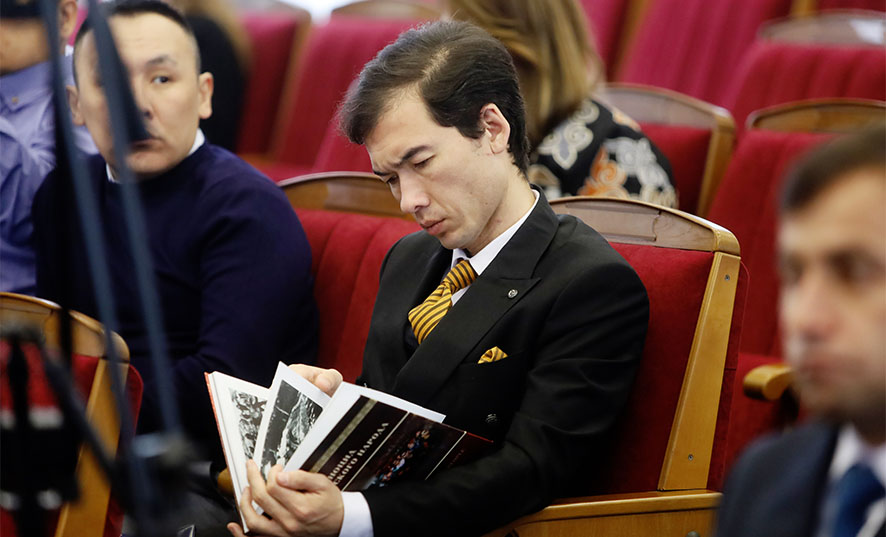
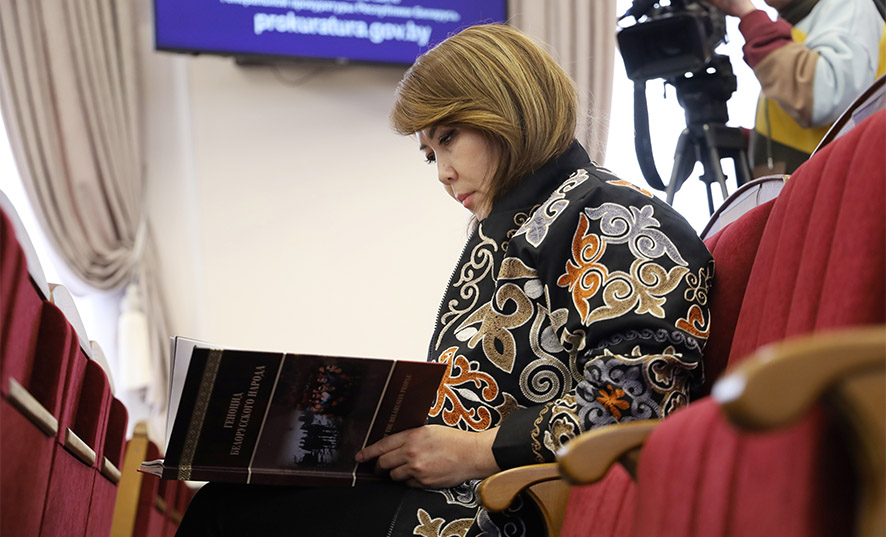
The guests expressed their sincere gratitude for the warm welcome, open and informative dialogue.
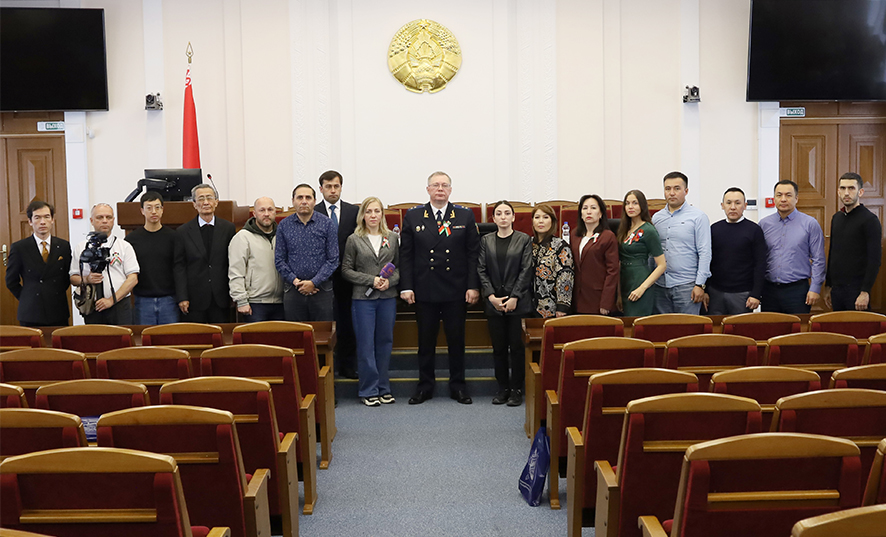
Photo: Prosecutor General’s Office
Department for Interaction
with Mass Media
Prosecutor General’s Office of the Republic of Belarus
Other news
Strengthening traditional spiritual and moral values, perpetuating the memory of defenders of the Fatherland, victims of Nazism and fascism: a meeting of the Joint Collegium of the Prosecutor General’s Offices of Belarus and Russia was held in Suzdal
Development of cooperation in the legal sphere: Prosecutor General of Belarus Andrei Shved met with representatives of the Zimbabwe Anti-Corruption Commission
Main events
International Conference dedicated to the 77th anniversary of the adoption of the UN Convention on the Prevention and Punishment of the Crime of Genocide: results of the first day
Strengthening traditional spiritual and moral values, perpetuating the memory of defenders of the Fatherland, victims of Nazism and fascism: a meeting of the Joint Collegium of the Prosecutor General’s Offices of Belarus and Russia was held in Suzdal
Development of cooperation in the legal sphere: Prosecutor General of Belarus Andrei Shved met with representatives of the Zimbabwe Anti-Corruption Commission